

The Future of AI in Business: From Predicting to Creating
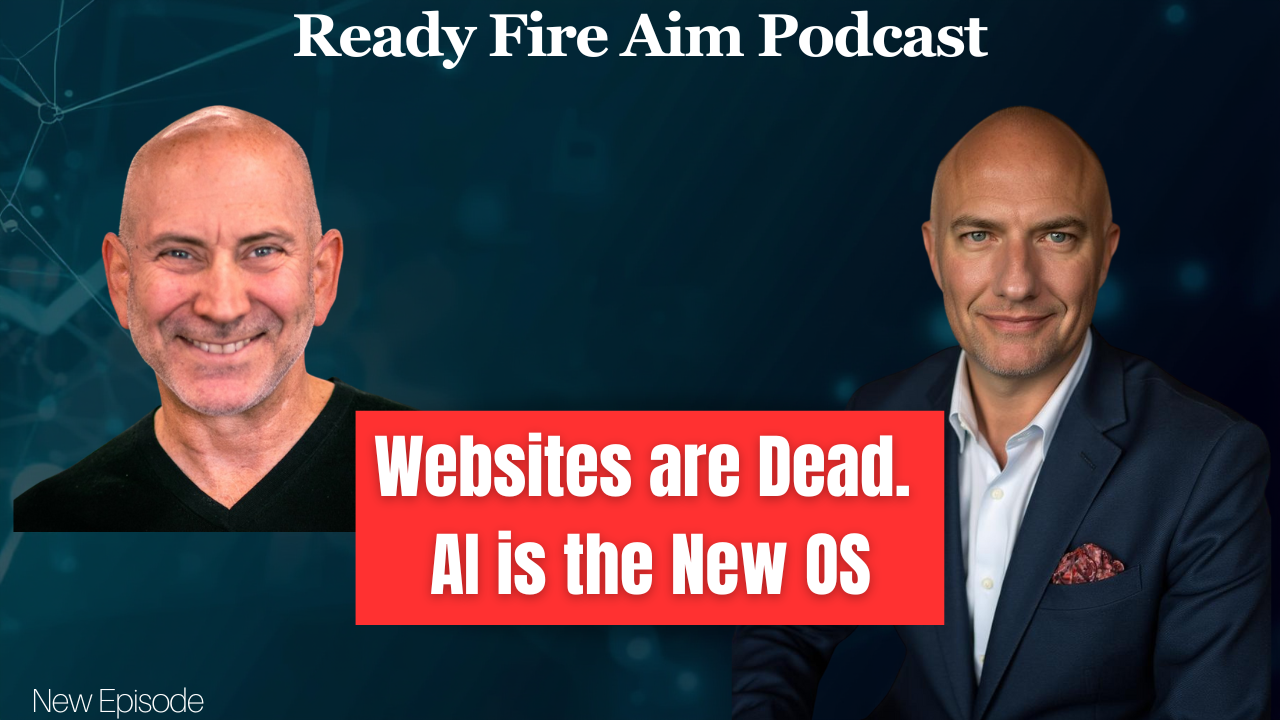
Artificial Intelligence has evolved from simple speech recognition to complex, autonomous systems capable of transforming entire industries. At the Ready Fire Aim Podcast, Thad Barnes explores the journey from early AI to the modern, agentic economy where AI acts as an extension of human decision-making.
Early AI: Foundations and Breakthroughs
- 1983: Thad Barnes’ first AI class at Stanford, focusing on speech recognition.
- Mid-90s: Emergence of AI software like Dragon Naturally Speaking, revolutionizing document processing.
- 1970s-80s: Building blocks like Checkers programs and early chess engines paved the way for modern AI.
The Power of Transformers and Attention Mechanisms
In 2018, Google’s seminal paper, Attention Is All You Need, introduced transformers—a technology enabling parallel processing and dramatically improving language models. Nvidia’s GPUs became essential hardware, fueling the AI revolution due to their ability to process vast amounts of data simultaneously.
Understanding Hallucinations and AI Predictive Behavior
Hallucinations occur when AI models generate plausible but inaccurate information, especially under higher temperature settings. These are controlled by parameters like thermometer (Temp), which influence how far AI strays from the most probable next word, affecting precision and creativity.
Moving Beyond Prediction: AI as a Reasoning Entity
The key challenge is shifting AI from mere next-word prediction to reasoning and logical thinking. Techniques like Bayesian weighting and Multi-Pass analysis are emerging strategies for AI to synthesize diverse perspectives and develop unique insights.
The Rise of Agentic AI: Personalized and Autonomous
The next evolution involves creating AI agents that act as personal representatives—training them with specific data, such as company history or personal preferences, and deploying them for tasks like sales, onboarding, and customer service. For example, a sales bot tailored to a company’s pitch can act as a 24/7 representative, dramatically improving efficiency.
Embedding Knowledge: Retrieval Augmented Generation (RAG)
- This approach integrates your own data into AI, making responses more accurate and personalized.
- Business owners can upload proprietary content—documents, case files, videos—to create specialized AI models that reflect their unique expertise.
The Transition from Websites to Data-Driven Ecosystems
Traditional websites are giving way to AI-driven ecosystems that answer specific customer questions and execute transactions seamlessly. This transformation emphasizes dynamic, personalized experiences over static web pages.
Standards and Open Protocols for AI Ecosystems
Just as GSM revolutionized telecommunications through open standards, the future of AI depends on open, interoperable protocols, enabling anyone to build and deploy AI services at scale. Proprietary systems like Starlink may face competition and standardization challenges similar to those in telecommunications.
Conclusion: Embracing the Agentic Economy
Businesses must adopt AI proactively to stay competitive. The focus shifts from building static websites or systems to developing intelligent ecosystems and personalized agents that continuously learn and adapt. The key is to keep pace with rapid AI advancements, leveraging tools like Retrieval Augmented Generation, training specialized models, and understanding that AI is destined to become the operational backbone of future enterprises.
To learn more about leveraging AI in your business, visit redshiftlabs.io and explore the “Reset” series—a comprehensive guide to navigating the AI revolution.